|
|

-
1577
 NOVEMBER 1, 2026: Pelican Out, Running Rabbit In -
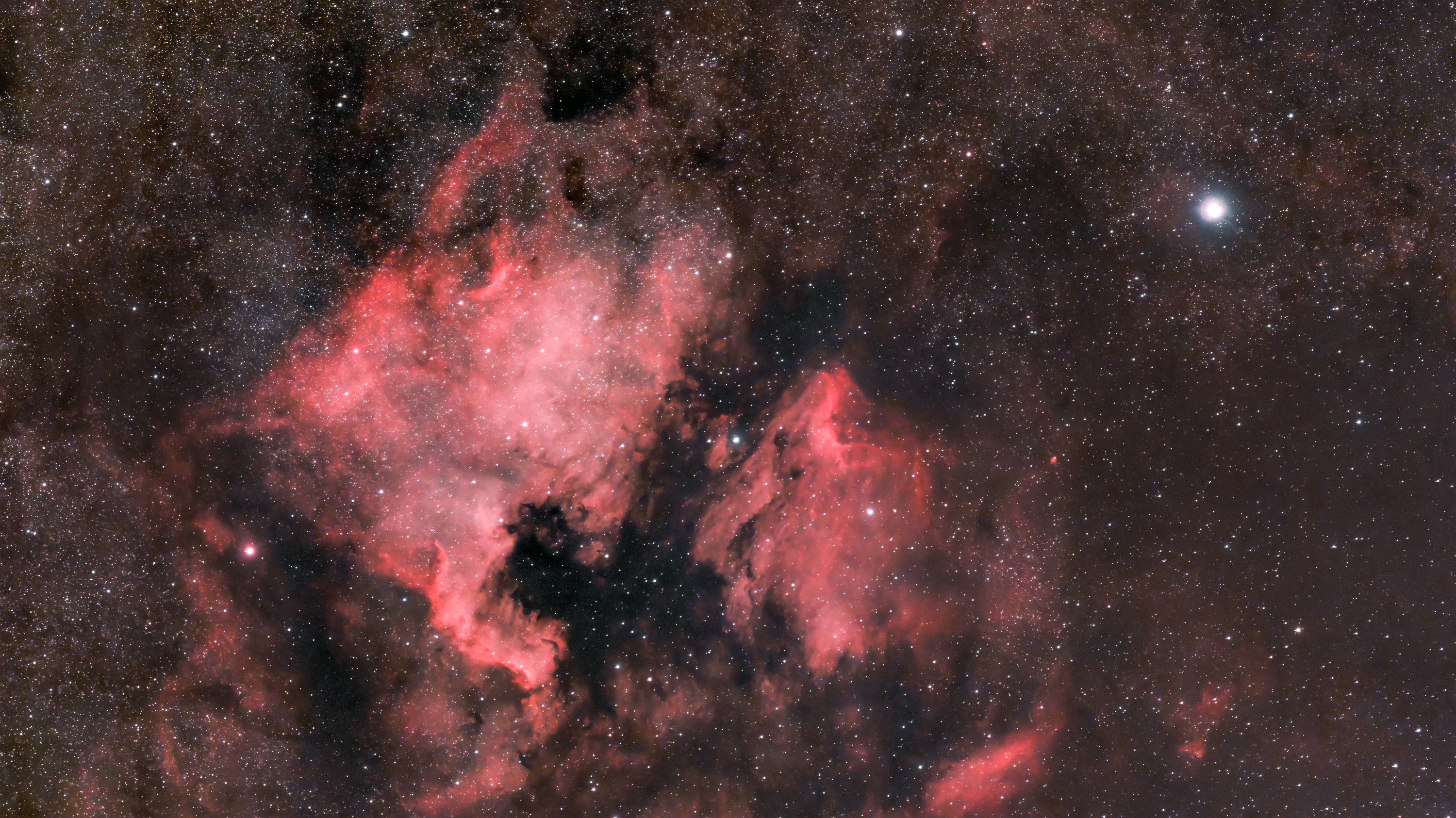
I am definitely a friend of lagomorphs: pikas, hares, and especially rabbits. You may know rabbits as those backyard mammals that can be approached only so closely before they bolt away in a burst of energy. And rightfully so… Rabbits have been around for about 50 million years as prey animals. Their ability to escape attacks is legendary; National Geographic has called them the ultimate evaders, with sight, smell, and hearing evolved to the point that by comparison, humans would be sightless, nose-blind, and deaf. Yet with all of these attributes, the average longevity of a rabbit in the wild is still only one to two years (another source indicated less than a year), whereas in captivity as well-maintained pets, lifespans of ten to twelve years are reasonable, depending upon the breed. * Adopting rescue rabbits that may have had some bad experiences along their life paths and changing their attitudes of fear and mistrust to love and affection have been particularly rewarding to my wife and me. * Rabbits rank number one as exotic pets, third as domesticated companions, behind cats and dogs, but they only have one obscure star pattern to view in the heavens, Lepus the Hare, hiding frozen in place underneath the feet of Orion the Hunter, who is warding off his two hungry hunting dogs, Canis Major and Canis Minor. Canis Venatici, the hunting dogs of Boötes the Herdsman, rounds out the canines of the sky. Leo, Leo Minor, Lynx, and the obsolete star pattern of Felis are the big cats and a wannabe cat of the heavens. * Thank goodness, there is no pelican constellation. Birds are represented nine times as star patterns, but there is the famous Pelican Nebula located in Cygnus the Swan, near its brightest star, Deneb. It has got to go! It needs to be renamed the Running Rabbit Nebula. See my picture below. The North American Nebula, left; the Running Rabbit, or perhaps the scampering hare, is in the middle escaping upwards, evading Deneb, the brightest star in Cygnus to the upper right and the North American Nebula. * WHAT, you cannot see it! Substitute the pelican's bill for the rabbit's long ears, and its body, tail, head, neck, legs fuzzy from his dash, even an eye (circular, dark nebula just to the right of the ear) come into plain view. If you do not see a rabbit, I'll sincerely have to consider our friendship. Just kidding, of course. Well, maybe not. Ad Astra!
|
The North American Nebula is left of the Running Rabbit Nebula formerly known as the Pelican, or so I would wish. To the right is Deneb, the brightest star of Cygnus the Swan. The rabbit it running up through the image evading the North American Nebula and Deneb. Gary A. Becker image... |
1578
NOVEMBER 8, 2026: Taurid Meteors Reaching Peak Activity
I have written about this minor meteor shower perhaps a half dozen times, and I often pen my words about the Taurids with a little trepidation. You will not see many, but when I remember the many nights I have spent meteor watching and the shooting stars etched into my video memory, one Taurid has played out repeatedly. * It was early November in my college days, sky watching with friends at Pulpit Rock Astronomical Park near Hamburg, PA. I remember it being uncomfortably cold and windy, my body dressed for winter, cocooned in a sleeping bag. It certainly was not going to be an all-nighter. We had seen perhaps a half dozen meteors in several hours of observing, and half of that number were Taurids. Suddenly to my left, a bright, sputtering shooting star (zero magnitude) appeared and glided glacially across the heavens. As it entered the thicker atmosphere, it wavered back and forth before sparking into the autumn night. It traversed a good portion of the heavens and produced enough adrenaline to keep me alert for several more hours before the cold drove my astronomy friends and me to quit. That's the Taurid Meteor Shower in a nutshell. You will not see many, perhaps none, but you may get the chance to witness a winner, a bright meteor or even a fireball rolling across the heavens in a slow motion dance. * The Taurid meteor stream is divided into a northern and a southern component. The particles that produce them have their origin from Comet Encke, or more precisely known as 2P/Encke, a short period comet that zips around the sun in only 3.3 years, the shortest length of time for a moderately bright ice and dust ball to orbit. Encke's inclination (tilt) to the plane of Earth's orbit is only 11.3 degrees, about twice that of the moon, and its motion is prograde, in the same direction as Earth's orbit around the sun. This means the debris expelled from Encke is moving in the same direction as the Earth. When Earth's orbital speed gets subtracted from Encke's orbital speed, the entrance velocity for Taurid meteors are very, very s-l-o-w, about 17 miles per second. Because Comet Encke has circled near the Sun for perhaps 10,000 years, many of the smaller dust particles it has released have been removed from its path by the gravitational tugs and pulls of many near passages with Mercury, Earth, and Jupiter. In addition, non-gravitational forces, such as the effects of electromagnetic radiation (light) from the sun, slow the orbital speed of very small cometary particles and cause them to spiral into the sun. The larger particles that remain produce the bright, slow-moving shooting stars that have given these two meteor streams their identity. The same forces that have depleted the smaller dross have also helped to disperse the larger particles from their original orbits. This has created several months' worth of minor meteor activity. * Because both the North and South Taurid streams are associated with the same comet, it has been inferred that Encke's main body is very friable. Large chunks of the comet have been broken off in the past to form the two streams. More recently, a small part of Encke has been associated with the Tunguska Meteorite airburst that occurred on June 30, 1908 over central Siberia near the Podkamennaya Tunguska River. * The Southern Taurids produce their greatest activity around the 5th of November. Seven days later, the Northern Taurids peak on the 12th. The Northern Taurids are active from about October 20 through December 10, and the Southern Taurids can be seen from about the 20th of September to the 20th of November, so do not worry about observing on the specific evenings of maximum activity. Any time after 10 p.m. during the first half of November should prove successful for seeing one or two of these slow-moving meteors from the Taurid streams if sky watchers exercise patience while making their observations. Much success... Ad Astra!
-
1579
NOVEMBER 15, 2026: Night of the Fireballs
-
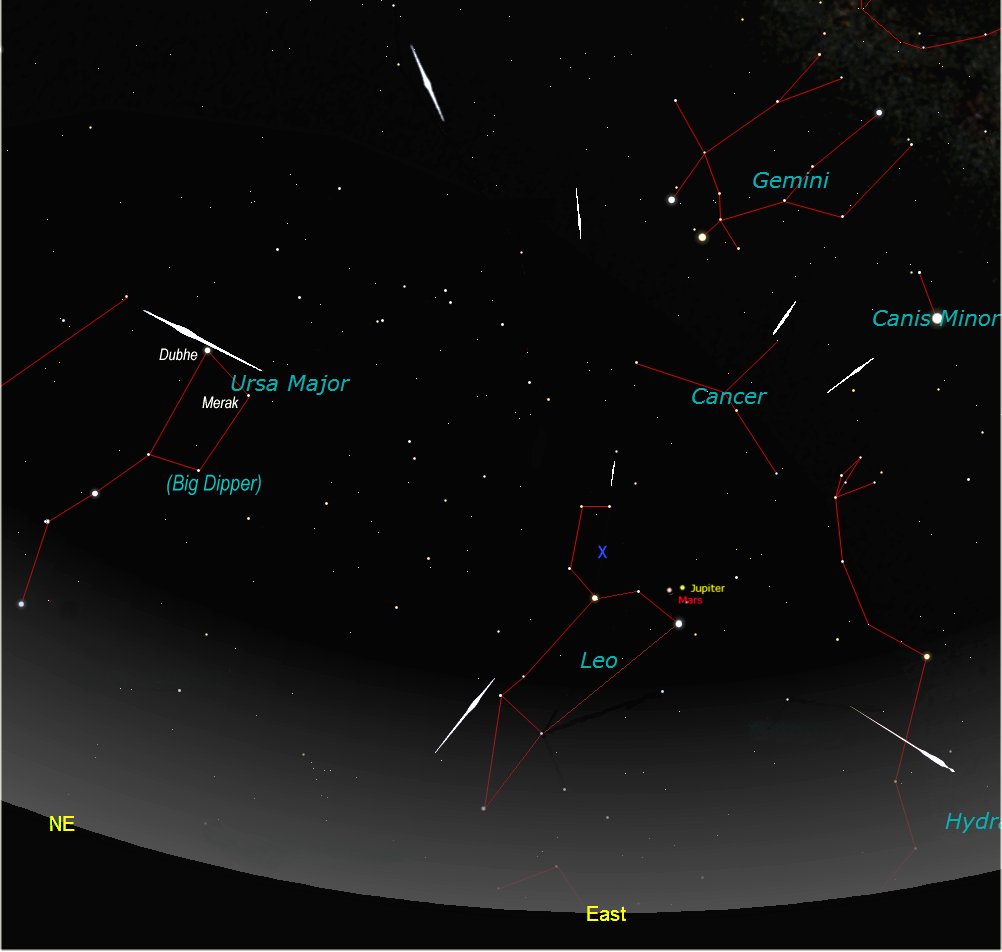
It was Friday, November 17, 2000, and it had been an extremely busy school day and evening. Besides five regular classes, one at Allen High and four more in the Allentown School District Planetarium, I had two evening programs lined up after classes. Then I had promised my wife we would go to the movies to see the recent release of Charlie's Angels, an action-comedy starring Drew Barrymore, Cameron Diaz, and Lucy Liu. How could I say no to that lineup of eye candy on the eve of a weekend? It was also the night of the Leonid Meteor Shower's peak, so before dashing off to the theater, I got my gear together for an after-party of meteor observing in my backyard. I'm out of breath just writing about that day. * What made the timing of the evening's events special was that the radiant, the location from where the meteors would appear to be emerging, was getting high enough above the horizon about the time when my wife and I would get back from the feature film. Ironically, the nearly third quarter gibbous moon was at the same location from where the meteors would be streaming, and even though very bright meteor activity was predicted, I assumed there would be little to be seen. Forecasting these types of events for a specific target area in meteor astronomy was in its infancy and rarely accurate. * However, outside I went and saw nothing other than a dark autumn sky with the bright moon rising in the east. After five minutes, I made one of those, "If it's going to happen, make it now" statements before calling it quits and counting slowly down from five. * At "two" a bright fireball scorched the velvet heavens, and I hurried inside to climb into my winter gear. For about the next two hours, dressed in my freezer suit and cocooned in a sleeping bag in the clearest spot of my leaf-strewn backyard, the fireballs rained. To my left, my house blocked a fourth of the sky, and to my right, it was not much better; a stand of tall, but leafless ash trees interfered with another third of the heavens. Still, exceptionally fast and luminous Leonids appeared in intervals of a few minutes. Most of them were easily caught within the web of my ash trees' skeletal branches, some appearing very close to the moon. In total, I counted 70 bright meteors during two hours, many of them fireballs (brighter than Venus), then nothing after 2:30 a.m. The adrenaline waned, and I began zoning out, calling it quits shortly before 4 a.m., but with a story to tell to my classes the following Monday. * Leonid eve in 2026 occurs on Tuesday, November 17 into the morning of Wednesday the 18th with no promises being made for any exceptional meteor activity. Rates will pick up during the morning of the 18th to about 15 meteors per hour from the countryside, half that for suburbia. No night of the fireballs is expected in 2026, nor are exceptional displays expected in the near future, until the Leonids' progenitor, Comet 55P/Tempel-Tuttle, returns to round the sun in May of 2031. Even then, astronomers are skeptical about noteworthy displays. Gravitational perturbations from Tempel-Tuttle's last passage near Jupiter may have moved meteoroid particles farther from the Earth's orbital path. * By 11 p.m. the time the Leonid radiant breaks the horizon, the nearly first quarter moon will be in a setting position in the west. I would begin observations around 1 a.m. on the 18th. Also look for bright Jupiter and Mars, just over one degree apart and very close to where Leonid meteors will be streaming. Left click here for a map of the radiant. Ad Astra!
|
Use the location of brilliant Jupiter and its close proximity to Mars to find the approximate radiant of the Leonid Meteor Shower on the morning of November 18. The blue "X" marks the exact position from where Leonid shooting stars will be streaming. This map is set for 3 a.m. Gary A. Becker map using Software Bisque's The Sky...
|
-
1580
NOVEMBER 22, 2026: It Happened At John's Place
-
|
There was no fence in the background, no basketball court, just a raggedy mowed lawn and a chicken coop that acted as a horse stable to the far right, but it was here that I spent my first night under the stars watching for August Perseid meteors with cousins John and David. It all started at John's place. John Blazosky image, October 17, 2026...
|
-
1581
NOVEMBER 29, 2026: A Different Kind Of Telescope For Christmas
-

|